
Becky’s Newsletter27 JULY 2026COMMUNITY & PARTNERSHIPS
When organisations come to the work
By late July 2026, organisations and professionals across several sectors were approaching Becky’s Button directly — many seeking personal safety alarms for the people they support.
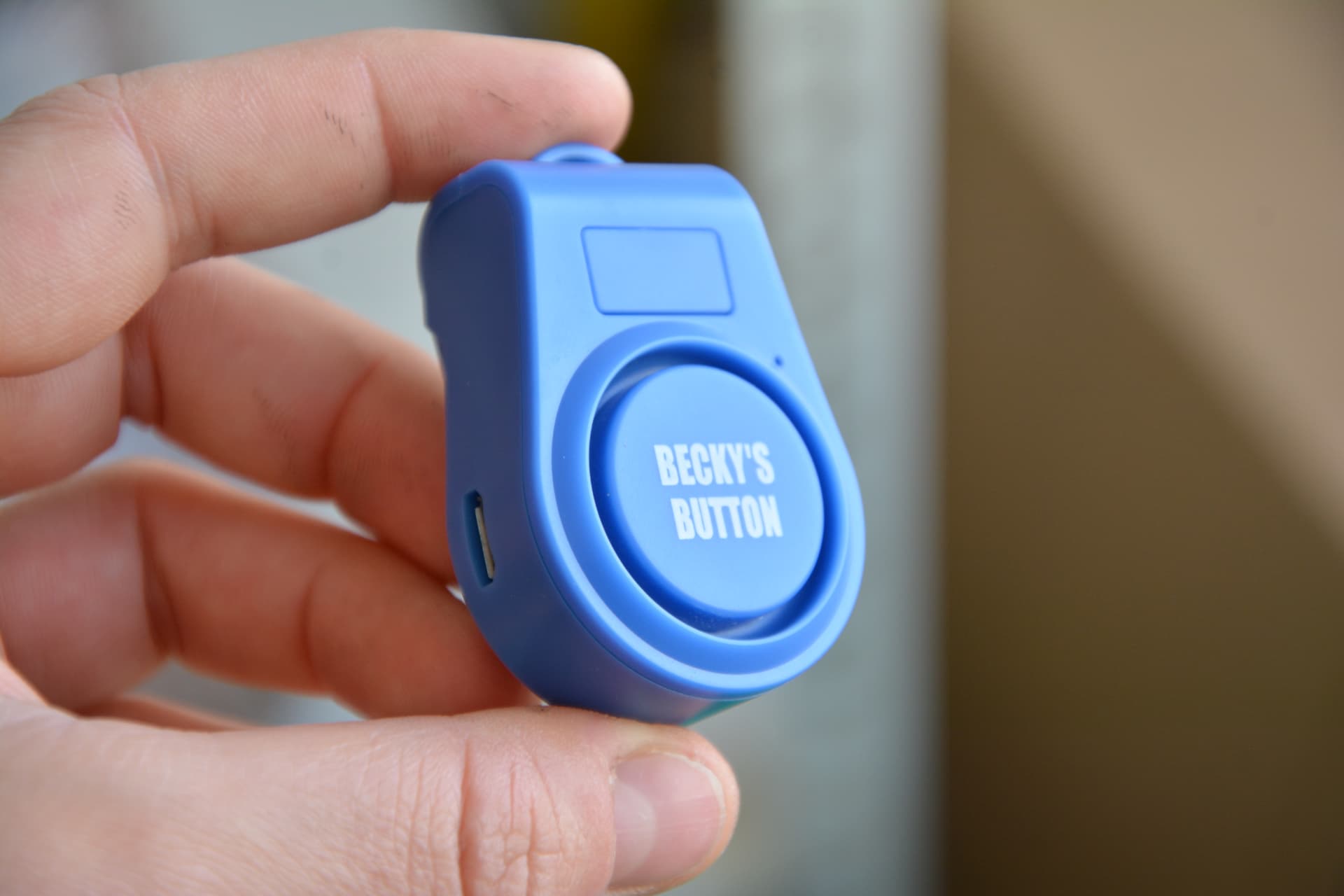
Demand from organisations already supporting people at risk
As at 27 July 2026, seventeen organisations and professionals had approached Becky’s Button without being actively prospected. Twelve of those enquiries were from organisations asking for personal safety alarms for the people they serve.
The organisations represented a broad range of settings, including a hospital accident and emergency department, two local authorities, three colleges, a prison healthcare service, and services working in women’s aid, domestic abuse, anti-trafficking, refugee support, homelessness and nightlife safety.
That pattern is significant because Becky’s Button’s practical support model is built around working through organisations that are already connected to communities and people who may be at heightened risk.
Practical support through trusted organisations
Becky’s Button supplies personal safety alarms free to organisations reaching people at risk, funded by people who choose to give. The charity has distributed more than 8,400 devices across eight countries.
The distribution figure is a measure of scale. Separately, the alarm gives confidence and a means to draw attention where drawing attention may bring help. It should not be described as preventing or deterring an attack, and it is not a substitute for specialist support.
Organisations speaking in their own voice
Some partners have also spoken publicly about the work under their own names. Lincoln College and SOHTIS have published about their involvement, while Falcon Support Services recorded an introduction to Becky’s Button, directed service users to the charity and invited other organisations in Leicestershire to come forward.
For a small charity, this kind of inbound engagement is one indication that the work is being recognised by organisations already operating close to people who may need practical support.